
ACTORS
An actor is a user or external system with which a system being modeled interacts. For example an E commerce system involves various types of users including: Customers, Database administrator, user-interface manager and system administrator
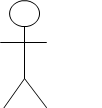
These users are all actors. An actor is external to a system, interacts with the system, may be a human user or another system, and has goals and responsibilities to satisfy in interacting with the system. Actors address the question of who and what interacts with a system. In the UML, an actor is shown as a “stick figure” icon, or as a class marked with the actor keyword and labeled with the name of the actor class.
Use case guidelines for use case models
Use case diagrams are considered for high level requirement analysis of a system. So when the requirements of a system are analyzed the functionalities are captured in use cases. when planning to draw use case diagram the following items should be identified.
- Functionalities to be represented as use case
- Actors
- Relationships among the use cases and actors.
Use case diagrams are drawn to capture the functional requirements of a system. So after identifying the above items we have to follow the following guidelines to draw an efficient use case diagram.
- The name of a use case is very important. So the name should be chosen in such a way so that it can identify the functionalities performed.
- Give a suitable name for actors.
- Show relationships and dependencies clearly in the diagram.
- Do not try to include all types of relationships. Because the main purpose of the diagram is to identify requirements.
- Use note whenever required to clarify some important points.
 Study with Jamila